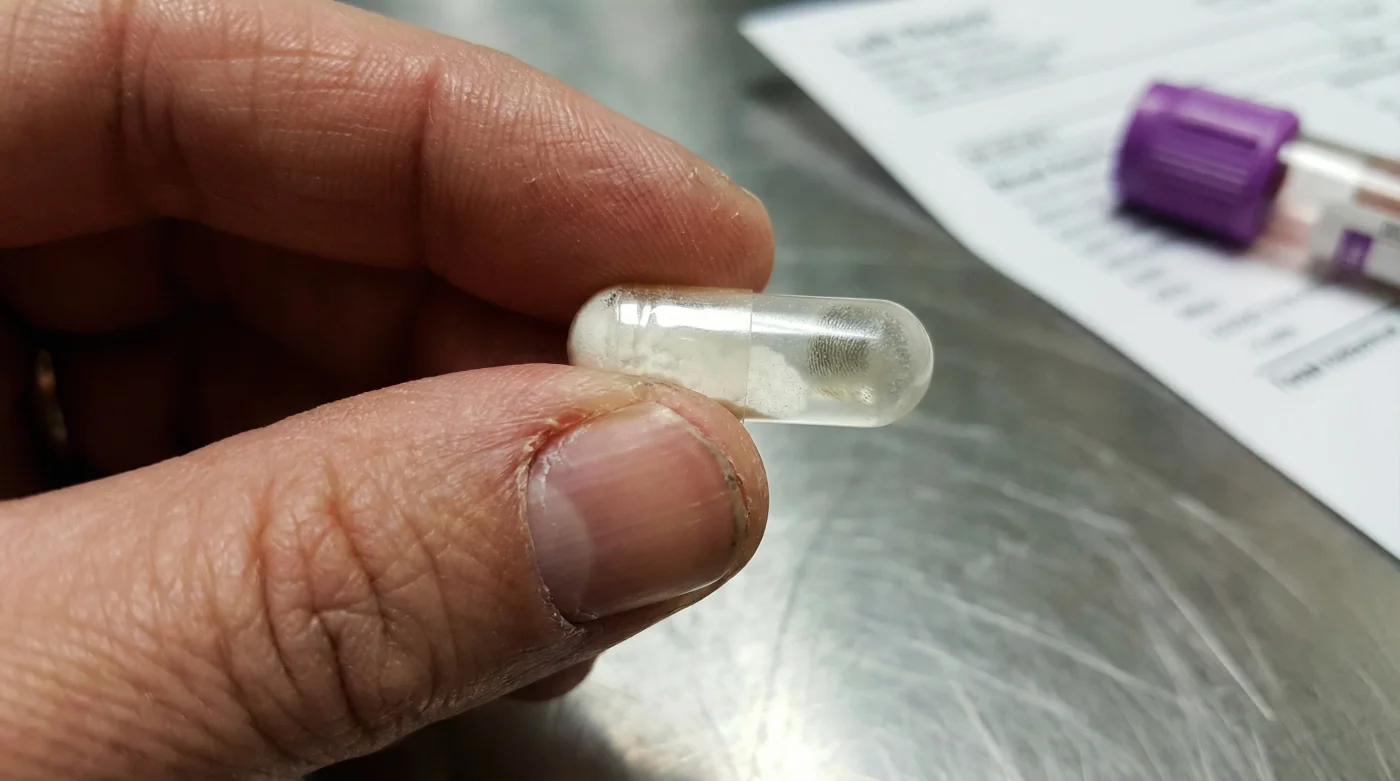
You hear the familiar rattle of the plastic bottle before the kettle even finishes boiling. It is part of your morning rhythm now. A small, innocuous capsule swallowed with a sip of lukewarm Earl Grey, carrying the heavy promise of thicker hair, stronger nails, and a radiant complexion. You wipe the condensation from the kitchen window, feeling the chill of the morning, and trust that you are doing something entirely good for your body. But beneath this comforting daily ritual, a silent sabotage is taking place.
For women navigating the unpredictable hormonal shifts of their forties and fifties, fatigue often settles into the bones like a damp fog. You go to your GP seeking answers. They organise a routine blood test. Yet, that little beauty capsule you took at breakfast is actively distorting the very numbers your doctor relies on.
The Smudge on the Diagnostic Lens
Imagine trying to read a compass while holding a strong magnet in your opposite hand. The needle swings wildly, offering a confident but entirely false sense of direction. This is exactly what biotin does to your thyroid function test.
You are likely taking high doses of Vitamin B7, sold under the more glamorous name of biotin. It is brilliant for keratin infrastructure, but it is disastrous for immunoassay testing. NHS laboratories use a specific chemical bond to measure your thyroid hormones—a bond that relies on a reaction between biotin and a protein called streptavidin. When your blood is already saturated with excess biotin from your morning supplement, the lab machinery becomes overwhelmed. It breathes through a pillow, unable to see your true hormone levels.
The result? The machines frequently report a falsely high level of circulating thyroid hormones (T4 and T3) and a falsely low level of Thyroid Stimulating Hormone (TSH). To the untrained eye, your results suggest an overactive thyroid. Meanwhile, you are sitting in the consultation chair, shivering, exhausted, and carrying the classic markers of an underactive one.
| Patient Profile | Supplement Goal | The Diagnostic Consequence |
|---|---|---|
| Women 40+ with thinning hair | Taking 5,000mcg+ Biotin daily | Falsely high T3/T4, hiding hypothyroidism |
| Menopausal women seeking energy | B-Complex multivitamins | Mimics Grave’s Disease in blood work |
| Those with brittle nails | Hair, Skin & Nails gummies | Missed medication dosage adjustments |
I recently spoke with Dr. Sharma, an endocrinologist working in a rather draughty NHS clinic in the Midlands. She recalled a patient who had spent six months being bounced between specialists. The woman’s heart raced only with anxiety, yet her blood work insisted she was fiercely hyperthyroid. Dr. Sharma tapped her pen against the printed results, looked at the exhausted woman across the desk, and asked a surprisingly simple question: ‘What are you taking to keep your hair so glossy?’ The culprit was a 10,000-microgram daily biotin habit purchased from the local chemist.
The Mechanical Logic of the Lab
To understand how to fix this, you must understand the mechanics of the blood draw. It is not that biotin damages your thyroid; it simply blinds the testing equipment.
| The Component | Its Natural Role | The Laboratory Conflict |
|---|---|---|
| Vitamin B7 (Biotin) | Converts food into energy, aids keratin | Used as a binding agent in NHS assay tubes |
| Streptavidin | A bacterial protein (irrelevant to the body) | Latches onto biotin to measure TSH levels |
| The Blood Sample | Carries your natural hormones | Flooded with external biotin, blocking the latch |
The daily recommended intake for biotin is a mere 30 to 100 micrograms. Most modern beauty supplements pack a staggering 5,000 to 10,000 micrograms per capsule. This sheer volume clogs the receptor sites in the testing vials.
The Five-Day Washout Period
- New UK cosmetic regulations restrict popular over-the-counter retinol serum concentrations
- NHS hormone replacement therapy shortages force immediate prescription rationing across Britain
- Unrinsed micellar water silently destroys the lipid barrier during menopause
- Daily biotin capsules disguise crucial thyroid blood test results in women
- High-strength niacinamide serums trigger severe inflammatory reactions on ageing complexions
First, audit your bathroom cabinet. Look beyond the obvious ‘Hair, Skin, and Nails’ bottles. Check your daily multivitamin, your menopause support blends, and even your prenatal leftovers. If the label lists Biotin, Vitamin B7, or Vitamin H, it must be paused.
Second, implement the 120-hour rule. While some medical leaflets suggest 72 hours, endocrinologists increasingly recommend a full five days to ensure the high-dose synthetic vitamins are entirely flushed from your system. For exactly five days before the needle pierces your skin at the phlebotomy clinic, keep the bottles firmly shut.
Third, drink plenty of water during this washout phase. Biotin is water-soluble. A hydrated system is an efficient one, ensuring your blood sample will reflect only your natural baseline.
| The Pre-Test Audit | What to Look For | What to Avoid |
|---|---|---|
| Label Checking | ‘Biotin’, ‘Vitamin B7’, ‘Vitamin H’ | Assuming basic multivitamins are clear |
| Timing the Pause | A full 5-day (120-hour) cessation | Stopping just the night before the test |
| GP Communication | Mentioning your supplement history clearly | Hiding beauty pills for fear of judgment |
Reclaiming Your Natural Rhythm
Understanding the delicate interaction between what you consume and how your body is measured offers a profound sense of control. You are no longer just blindly swallowing capsules hoping for the best. You are actively managing your medical data.
True wellness requires clarity. When you clear the smudge from the diagnostic lens, you allow your doctors to see the genuine state of your health. That clarity is the first real step towards reclaiming your energy, lifting the fatigue, and finding the precise care your body is quietly asking for.
‘An accurate diagnosis is impossible when the chemistry of the blood is wearing a disguise; always declare your supplements as if they were prescription medications.’
Essential Clarifications on Biotin Testing
Does biotin actually damage my thyroid gland?
Not at all. It only interferes with the chemical testing equipment used in the laboratory. Your actual thyroid function remains exactly as it was.How many days must I stop taking biotin before a blood test?
You should pause all biotin supplements for a minimum of 72 hours, though five full days (120 hours) is the safest standard to guarantee accurate NHS results.Will a five-day break cause my hair to fall out?
No. Hair operates on a very slow growth cycle. A brief pause in your vitamin regimen will not disrupt your hair or nail progress.Are there hidden sources of biotin I should check?
Yes. Beyond beauty supplements, check B-complex vitamins, energy drinks, and heavily fortified breakfast cereals or protein powders.Should I tell the phlebotomist about my vitamins?
Absolutely. Mentioning that you recently stopped a high-dose biotin supplement allows the lab to add a clinical note, ensuring your results are interpreted with full context.