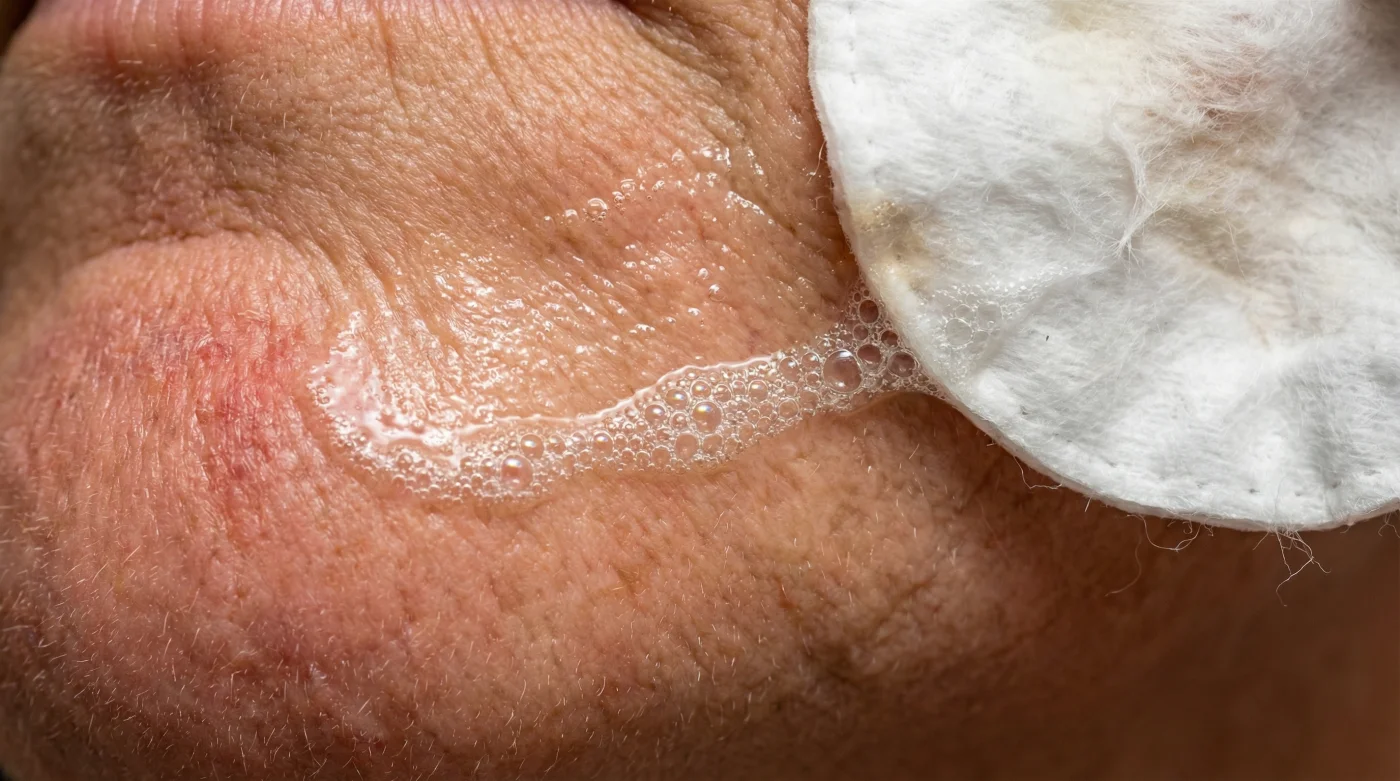
You are standing at the bathroom sink at 10 PM. The house is quiet, save for the distant hum of the boiler. You soak a cotton pad in micellar water, swipe it across your tired cheeks, and toss it in the bin. The bottle explicitly says ‘no rinse required’, so you pat on your moisturiser, switch off the light, and head to bed. You feel efficient. You feel clean. But beneath the surface, a quiet erosion is taking place.
That familiar, slightly tight feeling you notice as your head hits the pillow? It is not the sensation of a thorough clean. It is the feeling of your skin’s first line of defence quietly giving way. For years, the beauty industry has sold us the dream of the one-step, leave-on cleanser. However, as your body navigates the hormonal shifts of menopause, this convenient shortcut becomes a silent destructive force.
The Soap Left on the Silk
To understand the friction here, we must look at what micellar water actually is. Marketing campaigns paint it as a mystical, pure water sourced from alpine springs. In reality, micelles are tiny clusters of surfactant molecules suspended in liquid. Surfactants are essentially mild detergents. Their job is to attract oil, dirt, and makeup, pulling them away from the skin so they can be wiped off.
Imagine washing a delicate, vintage silk blouse. You soak it in a basin with a dash of washing-up liquid to lift a stain. Now, imagine taking that damp, soapy blouse, wringing it out, and hanging it directly in the wardrobe without running it under clean water. The fabric would eventually become brittle, dry, and prone to tearing. Your skin’s lipid barrier works precisely the same way. Leaving surfactants on your face overnight steadily dissolves the protective oils your skin desperately needs to retain moisture.
During menopause, your oestrogen levels drop dramatically, which in turn causes your natural lipid production to plummet. Your skin becomes thinner, drier, and far more vulnerable to irritants. By relying on an unrinsed surfactant to do the heavy lifting, you are systematically stripping away the very oils that keep your skin feeling supple and comfortable.
| Skin Stage | The Residue Risk | The Rinsing Benefit |
|---|---|---|
| Perimenopause (Fluctuating Oils) | Traps erratic sebum under a film of detergent, causing unexpected breakouts. | Balances oil production without stripping natural hydration. |
| Menopause (Lipid Depletion) | Accelerates water loss, leading to papery, uncomfortable tightness. | Preserves the fragile acid mantle, allowing night creams to absorb properly. |
| Post-Menopause (High Reactivity) | Creates chronic, low-grade inflammation and persistent redness. | Soothes the skin, reducing sensitivity to temperature changes and fabrics. |
I recall sitting in a softly lit treatment room in Marylebone, listening to a seasoned facialist named Clara. She was gently massaging a rich oat-milk cleanser into my skin while explaining a worrying trend. She had noticed a massive spike in red, highly sensitised skin among women in their late forties. ‘They all tell me they have sensitive skin,’ she murmured, ‘but they do not. They have sensitised skin. They are letting detergent sit on their face for eight hours a night because a plastic bottle told them it was a good idea.’
The Mechanics of the Invisible Thief
The ‘no-rinse’ instruction was actually born backstage at Parisian fashion shows. Makeup artists needed a rapid way to swap out heavy cosmetic looks between runway walks without a sink. It was designed for speed, not for long-term barrier health. When you bring that backstage urgency into your nightly rhythm, you bypass the very ritual your skin requires to heal.
| The Component | The Chemical Action | The Consequence of Leaving it On |
|---|---|---|
| Micelles (Surfactants) | Binds to oils and water simultaneously to lift debris. | Continues to bind to your natural ceramides, eroding the barrier overnight. |
| Preservatives (Phenoxyethanol) | Prevents bacterial growth inside the plastic bottle. | Can cause contact dermatitis when left to sit on thinning, mature skin. |
| Solubilisers (PEG-6) | Helps ingredients mix seamlessly in the water base. | Alters the skin’s natural pH, making it hostile to your own healthy microbiome. |
Every time you leave micellar water to dry on your face, you alter the pH of your acid mantle. Your skin naturally thrives in a slightly acidic state (around pH 5.5). Micellar waters often lean more alkaline. A disrupted pH is the equivalent of leaving the front door open during a winter storm; moisture escapes rapidly, and irritants wander in freely.
The Vital Second Act: Washing Away the Residue
The solution is not to throw your micellar water in the bin. It is a fantastic makeup solvent. The secret is to reframe how you use it. You must treat it solely as step one: the demolition phase. Step two is the cleanup. This is the vital double-cleanse technique that sweeps away barrier-stripping residues and restores order.
Begin by using your micellar water exactly as you do now, allowing the soaked cotton pad to gently lift away foundation and daily grime. Do not scrub. Let the micelles do the dissolving. Once the heavy lifting is done, move immediately to the sink. Do not let the surfactant dry on your face.
Take a small, pound-coin-sized amount of a lipid-rich cream, milk, or balm cleanser. Massage it into your damp skin using slow, deliberate upward circles. This action binds the remaining micellar detergents to the cream. Finally, rinse your face with lukewarm water—never hot—and a soft flannel. The warmth of the water and the gentle friction of the cloth sweep everything away, leaving your skin bare, balanced, and ready for nourishment.
| The Sensorial Test | Signs of a Compromised Barrier | Signs of a Resilient Barrier |
|---|---|---|
| The Towel Pat | Immediate craving for heavy moisturiser; skin feels paper-tight. | Skin feels softly pliable and comfortable, even before serums. |
| The Morning Touch | Cheeks feel hot, flushed, or rough to the fingertips. | Skin tone is even; texture feels smooth and adequately hydrated. |
| The Product Application | Serums sting or tingle sharply upon contact. | Products glide on painlessly and absorb without surface resistance. |
Reclaiming Your Evening Rhythm
- New UK cosmetic regulations restrict popular over-the-counter retinol serum concentrations
- NHS hormone replacement therapy shortages force immediate prescription rationing across Britain
- Unrinsed micellar water silently destroys the lipid barrier during menopause
- Daily biotin capsules disguise crucial thyroid blood test results in women
- High-strength niacinamide serums trigger severe inflammatory reactions on ageing complexions
When you protect your lipid barrier, your expensive serums and night creams finally have the foundation they need to perform. They are no longer fighting through a layer of detergent to reach your skin cells. You will find you need less product, experience fewer flare-ups, and wake up with a complexion that feels rested, rather than depleted.
Menopause asks a lot of your body, shifting your internal rhythms and rewriting the rules you have lived by for decades. You cannot control every hormonal change, but you can control what you leave on your skin before you sleep. Wash away the residue, rinse away the day, and let your skin breathe naturally once more.
‘The greatest disservice we ever did to mature skin was convincing women that a thorough cleanse could happen without running water.’
Frequently Asked Questions
Do I need to double cleanse if I do not wear makeup?
Yes. Micellar water is excellent at removing sunscreen and daily pollution, but those elements, combined with the surfactants, still need to be washed away with a second gentle cleanser to protect your barrier.
Can I just rinse my face with tap water after using micellar water?
A water rinse is better than nothing, but water alone cannot fully break down the surfactant residue left behind. A gentle milk or cream cleanser is required to properly lift the detergent from the skin.
What type of second cleanser is best for menopausal skin?
Look for non-foaming, lipid-rich formulas. Cream cleansers, cleansing milks, or balms containing ingredients like oat extract, squalane, or glycerin will comfort the skin without disrupting the acid mantle.
Why does my face feel tight after I use micellar water alone?
That tightness is the physical sensation of your natural oils being stripped away and moisture evaporating from the skin. It is a sign of dehydration, not cleanliness.
Will a double cleanse make my face more oily?
No. Paradoxically, by using a gentle second cleanser instead of harsh detergents, your skin will stop overproducing emergency sebum, leading to a much more balanced and calm complexion.