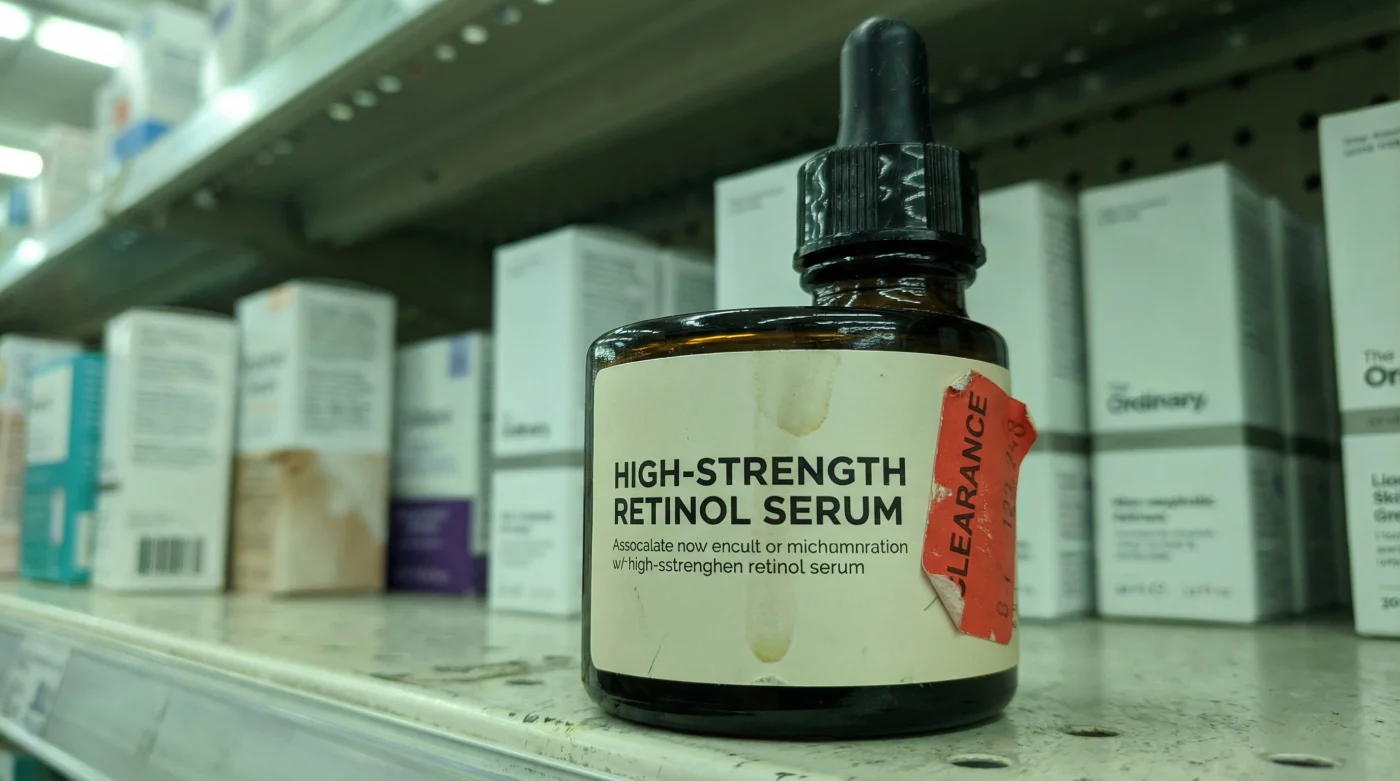
You stand at the bathroom sink, the quiet hum of the extractor fan overhead. Your fingers unscrew the heavy glass dropper of your evening serum, releasing that familiar, slightly earthy scent. It is a ritual you trust, a potent little bottle that promises to soften the edges of the day and the years. But the shelf life of this specific ritual is quietly ticking away.
The Restrictor Plate on a Familiar Engine
For years, the UK skincare market has operated on a quiet understanding: if you wanted clinical-grade results without a prescription, you simply bought a stronger bottle. Now, new alignment with cosmetic regulations is rewriting the rules on Vitamin A. The authorities are capping over-the-counter retinol concentrations at 0.3% for face products and a mere 0.05% for body lotions. If your current serum feels like a powerful engine driving your cellular turnover, the incoming law is a mandated restrictor plate.
I was sitting in a quiet consultation room with a formulator in Marylebone last month, watching her categorise a box of popular amber vials. ‘It is a matter of cumulative exposure,’ she explained, tracing the rim of an aluminium tube. ‘People are layering retinol moisturisers over retinol serums, eating fortified foods, and pushing their skin barriers to the absolute brink. The regulators are stepping in not because the ingredient is inherently dangerous, but because our collective appetite for potency has outpaced our common sense.’
| Skincare Profile | The Imminent Loss | The Next Best Step |
|---|---|---|
| The Seasoned Veteran | Loss of 1% clinical-strength maintenance serums. | Transition to clinical prescription services (e.g., Dermatica) for Tretinoin. |
| The Barrier-Damaged Enthusiast | Loss of aggressive, peeling overnight treatments. | Embrace the 0.3% cap; focus on consistency over intensity. |
| The Body Care Convert | Loss of high-dose retinol body lotions. | Switch to AHA/BHA body washes paired with the new 0.05% retinol cap. |
Securing Your Reserves: The Grandfathered Deadlines
This is where the friction hits your daily routine. The new legislation means several cult-favourite formulas are effectively facing extinction in their current iterations. Brands like The Ordinary (specifically their Retinol 1% in Squalane), Paula’s Choice (Clinical 1% Retinol Treatment), and Drunk Elephant (A-Passioni 1%) are directly in the crosshairs.
The transition is not happening overnight, but the sand is falling through the glass. Manufacturing of these high-strength over-the-counter formulas for the UK and European markets will cease by late 2024. Retailers are then granted a grandfathered period to sell through their remaining stock, which officially ends on 1 November 2025.
If you rely on these specific products, you have a brief window to act. You can purchase back-ups now, keeping them sealed in a cool, dark place (like the back of your fridge) to preserve their efficacy. However, hoarding is only a temporary fix to a permanent industry shift.
| Retinoid Derivative | Previous OTC Standard | New Regulatory Cap | The Mechanical Logic |
|---|---|---|---|
| Pure Retinol | Up to 1.0% (often higher in niche brands) | 0.3% (Face) / 0.05% (Body) | Reduces severe dermatitis and systemic Vitamin A overexposure. |
| Retinyl Palmitate | Largely unregulated by concentration limits | 0.3% limit alignment | Prevents cumulative toxicity when combined with daily supplements. |
| Retinaldehyde (Retinal) | Up to 0.2% typically | Will be monitored under similar threshold principles | Acts faster than retinol; lower concentrations remain highly effective without the aggressive sting. |
Adapting Your Routine with Intention
The moment you accept the 0.3% reality, your approach to evening skincare must evolve. Instead of relying on a single, aggressive hammer, you must learn to orchestrate a gentler symphony. Begin by applying your new, lower-dose retinol to completely dry skin, waiting a full ten minutes after cleansing.
- New UK cosmetic regulations restrict popular over-the-counter retinol serum concentrations
- NHS hormone replacement therapy shortages force immediate prescription rationing across Britain
- Unrinsed micellar water silently destroys the lipid barrier during menopause
- Daily biotin capsules disguise crucial thyroid blood test results in women
- High-strength niacinamide serums trigger severe inflammatory reactions on ageing complexions
If your skin truly requires heavy lifting for severe pigmentation or deep lines, it is time to cross the bridge into prescription territory. Online dermatology portals and local clinics can legally prescribe Tretinoin or Adapalene. These bypass the cosmetic restrictions entirely, offering supervised, medical-grade cellular communication.
Remember to physically massage your lower-dose serums into the skin with slow, deliberate upward strokes. A 0.3% formula used consistently, without causing the micro-peeling that forces you to skip days, will often outpace a 1% formula used sporadically.
| The Transition Checklist | Actionable Strategy |
|---|---|
| What to look for | Micro-encapsulated 0.3% formulas. These deliver the active ingredient slowly through the night, maximising the lower dose. |
| What to avoid | Panic-buying unsealed tubs. Retinol degrades rapidly when exposed to air. Only stockpile airtight pumps or tightly sealed aluminium tubes. |
| What to monitor | Expiry dates on the bottom of the bottle. Most sealed retinols only survive 12 to 18 months. Calculate your usage before bulk buying. |
A Gentler Evening Rhythm
There is a profound peace in letting go of the aggressive pursuit of perfection. For years, the beauty industry told you that if your skin was not red and flaking, the product was not working. This regulatory shift, while initially frustrating, is forcing a much-needed correction. It invites you to stop fighting your own biology.
By stepping down to a 0.3% cap, you are no longer treating your face like a renovation project. You are tending to a garden. The daily rhythm becomes softer. You will find your moisturiser sinks in better, your makeup sits more comfortably by midday, and the persistent tightness around your jawline slowly fades away. The loss of a favourite bottle is simply making room for a more sustainable, compassionate routine.
‘We must stop viewing skincare as an arms race; the healthiest skin is nurtured by consistency, not shocked into submission by sheer chemical force.’
Navigating the Retinol Regulations: FAQ
Are all retinoids banned in the UK now?
No. The ingredient is not banned, merely restricted. Over-the-counter face products will be capped at a maximum of 0.3% pure retinol to prevent cumulative skin damage.When will my favourite 1% serums disappear from shelves?
Manufacturing of non-compliant products will halt by late 2024. Retailers have a strict grandfathered period to sell off their remaining inventory, which formally closes on 1 November 2025.Is it illegal for me to buy stronger formulas from overseas?
It is not illegal for you to purchase them for personal use, but importing them through customs from unregulated markets comes with significant risks regarding formulation stability and authenticity.Will prescription retinoids be affected by this cosmetic ban?
Absolutely not. Prescription treatments like Tretinoin are classed as medicines, not cosmetics. They will remain available through licensed medical professionals and registered online pharmacies.How should I store my stockpiled serums to keep them active?
Keep them unopened in their original boxes, stored in a dark, consistently cool environment—such as a skincare fridge. Once you break the seal, you must use the product within six months.