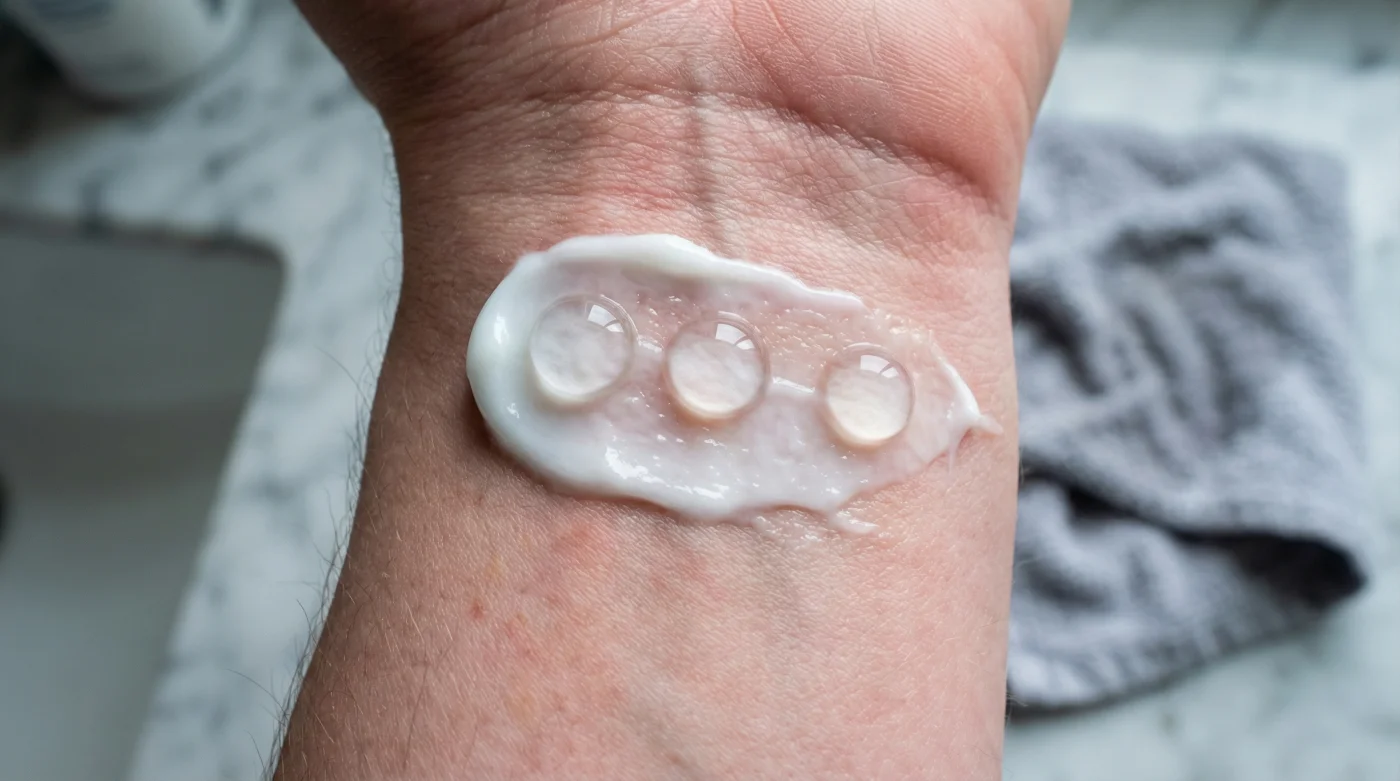
It is half-past six on a damp November morning. The bathroom tiles are cold underfoot, and the mirror is still faintly clouded from the shower. You unscrew the heavy glass jar of your luxurious new ceramide cream, savouring that faint, comforting scent of oats and botanicals. You massage a generous dollop into your cheeks, enjoying the rich, buttery slip.
Then, catching sight of the expensive hyaluronic acid toner you bought last week, you remember you are supposed to be hydrating. You splash a few drops into your palms and press them over your face.
Instead of sinking gratefully into your skin, the watery liquid simply beads up. It pools on your jawline, rolls down your neck, and drips onto your pyjamas. You are watching twenty pounds worth of premium skincare literally slide away down the ceramic basin.
The Canvas Tent Metaphor
For years, we have been quietly sold a comforting falsehood about our bathroom routines. We are told our skin is a limitless sponge, ready to gratefully accept whatever we slather on it, in whatever order we fancy. This chaotic approach to skincare layering is not just ineffective; it physically prevents your products from doing their jobs.
Applying a dense ceramide cream before a water-based toner is akin to waterproofing a canvas tent and then attempting to dye the fabric. It defies the basic rules of chemistry. Ceramides are lipids. They are fats. In the architecture of your skin, if your cells are the bricks, ceramides are the thick, protective mortar holding everything together and keeping the weather out.
When you put that mortar on first, you create a waterproof seal. You are shutting the front door and locking it.
| Skin Profile | The Layering Goal | The Payoff of Proper Sequence |
|---|---|---|
| Chronically Dry & Flaky | Deep hydration retention | Water feeds the cells; lipids stop the water evaporating into the central heating. |
| Oily but Dehydrated | Balancing oil production | Lightweight toners penetrate first, signalling the skin to stop overproducing its own heavy sebum. |
| Sensitive & Reactive | Soothing the barrier | Toners calm the irritation; the final ceramide layer acts as a physical shield against cold wind. |
I recall sitting with a veteran dermal therapist in a quiet café just off Harley Street, watching the rain lash against the window. We were discussing why so many people complain that their high-end serums do nothing.
“People spend hundreds of pounds on delicate, water-soluble toners,” she sighed, warming her hands on a flat white, “and then they block the door with a thick layer of fat beforehand. It breaks my heart.”
She explained that when you apply a lipid seal first, you are paying for premium hydration that will only ever sit on the surface. It is trapped. Eventually, that expensive toner just evaporates into the British weather, leaving your skin thirsty beneath a heavy, suffocating blanket.
| Product Type | Base Molecule | Skin Penetration Behaviour |
|---|---|---|
| Toners & Essences | Water (Aqua) | Sinks rapidly. Requires porous, unblocked skin to travel downwards. |
| Gel Serums | Water + Humectants | Binds to moisture already in the skin. Fails if a lipid barrier is present. |
| Ceramide Creams | Lipids (Fats) | Forms a surface film. Acts as a lid on a saucepan, trapping what is underneath. |
Rebuilding Your Morning Rhythm
- Copper peptides applied alongside glycolic acid immediately destroy expensive active ingredients
- Liquid foundation blended with soaking wet sponges creates visible texture patches
- Unwashed silk pillowcases trap overnight hair oils triggering severe forehead breakouts
- At-home dermaplaning tools used on damp skin actively spread staph bacteria
- Undiluted apple cider vinegar scalp treatments permanently weaken hair follicle structures
Begin with a gentle cleanse. Pat your face with a towel, but do not aggressively rub it bone-dry. You want your skin to feel slightly damp, like a freshly watered garden bed.
Now, apply your water-based toner. Press it into your cheeks, forehead, and neck with the flats of your hands. Feel the coolness of it. Give it thirty seconds to settle. It should vanish into the skin, leaving a plump, comfortable feeling.
Only then do you reach for the ceramide cream. Warm a small amount between your fingertips to soften the lipids, and press it firmly over the top of the toner. You are now applying the mortar to the bricks. You are sealing the hydration inside.
| The Routine Audit | What to Look For | What to Avoid |
|---|---|---|
| Texture Check | Watery, runny liquids always go on bare, clean skin first. | Never put a liquid over a paste, cream, or balm. It will separate. |
| Ingredient Scan | Look for ‘Aqua’ at the very top of the ingredient list for your first layers. | Applying products heavy in dimethicone or shea butter before your hydrating mists. |
| Application Speed | Allowing 30-60 seconds between a water layer and a lipid layer. | Rushing and mixing the water and oil together on your face into a soapy mess. |
Peace in the Protocol
There is a quiet, steadying satisfaction in doing things in their proper sequence. When you align your routine with the physical reality of how your skin functions, the frustration of wasted products fades away.
You stop fighting the chemistry of your own bathroom cabinet. Instead of suffocating your skin under a waterproof seal while it begs for a drink, you are finally giving it exactly what it needs, in the exact order it can actually use it.
Tomorrow morning, when the bathroom is cold and you are rushing for the kettle, take just a moment to respect the order of operations. Water first. Lipids second. It is a small, grounding ritual that saves your money, respects your skin’s boundaries, and ensures you walk out the door feeling genuinely cared for.
“Think of ceramides as the heavy winter coat of your routine; you wouldn’t put it on before your jumper, and you certainly wouldn’t expect rain to wash right through it.” – Dr. S. Lin, Dermal Specialist
The Layering Logic FAQ
1. Can I mix my toner and ceramide cream in my hand to save time?
No. Oil and water repel each other. Mixing them in your palm usually results in a separated, soapy texture that won’t absorb properly.2. How do I know if my serum is water-based or lipid-based?
Check the texture and the label. If it drops like a thin syrup and the first ingredient is ‘Aqua’, it is water-based. If it feels greasy or lists plant oils and ceramides high up, treat it as a lipid.3. Should I wait for the toner to dry completely before applying ceramides?
Not completely. Apply your ceramide cream while the skin is still slightly tacky from the toner. This helps lock in that surface moisture before it evaporates.4. Does this rule apply to sunscreen as well?
Absolutely. Sunscreen is your ultimate protective shield and should always be the absolute final step in your morning routine, over the top of your ceramide cream.5. What happens if I’ve been doing it wrong for months?
Your skin isn’t damaged, but it is likely dehydrated beneath the surface. Switch your order tomorrow, and you will notice a plumper, more comfortable face within a few days.