The house is entirely quiet, save for the faint drumming of rain against the frosted bathroom window. You stand in front of the mirror at twenty past ten, exhausted, holding an electric toothbrush humming with a familiar, mechanical vibration. You run it across your teeth, spit into the basin, rinse, and then—almost as an afterthought—pull a string of minty floss from its plastic dispenser to finish the job.
It feels incredibly productive, ticking off the final box of your evening ritual before collapsing into bed. You snap the thread between your molars, dislodging whatever remained from supper, rinse your mouth one last time, and turn off the light.
Yet, beneath the surface of that clean, minty sensation, an invisible error is playing out. By following this standard sequence, you are actively sabotaging your own efforts, doing the equivalent of mopping the kitchen floor only to immediately shake out a filthy rug right across it.
The order absolutely matters, and the bedtime routine we have collectively adopted is fundamentally backwards. Switching the timeline transforms a mundane chore into a genuine act of preservation.
The Anatomy of a Nighttime Reversal
To understand why the sequence fails, we must look at what happens in the dark spaces between your teeth. When you brush first, the bristles sweep over the flat surfaces, gathering up the soft, sticky film of daily eating. The paste foams up, doing its job well enough on the visible planes.
But then comes the floss. By pushing the thread down into the tight crevices after you have brushed, you are unwittingly taking the surface plaque, the food debris, and the decay-causing bacteria, and ramming them deeply into your gum pockets overnight.
Instead of removing the problem, you are trapping it. As you sleep, your mouth produces significantly less saliva, turning those tiny, newly packed pockets into a dry, undisturbed breeding ground. The bacteria multiply, completely shielded from the protective ingredients in your toothpaste.
Think of your gums when they are slightly inflamed; they feel heavy, almost as though they are breathing through a pillow. That low-grade throb is often the direct result of bacteria pushed firmly under the gumline and left to fester for eight hours in the dark.
Dr Helena Vance, a 52-year-old periodontist running a quiet clinic in Bath, sees the fallout of this reversed routine daily. She frequently points out how patients arrive with pristine, polished front teeth but chronically bleeding gums at the back. When she asks about their evening habits, they proudly recite the brush-then-floss mantra. She gently corrects them, noting that flossing last is akin to washing your hands and then immediately digging the dirt out from beneath your fingernails; you have simply moved the soil onto the clean surface, ensuring the bacteria remain exactly where they cause the most structural damage.
Adapting the Sequence to Your Evening State
Recognising the flaw is only half the battle. Actually implementing a new habit when you are bleary-eyed and ready for sleep requires tailoring the approach to your energy levels. Not everyone approaches the bathroom basin with the same enthusiasm at half-past ten.
For the exhausted commuter, the sheer thought of standing for an extra two minutes is daunting. Keep a small box of interdental brushes or floss on your bedside table. Sit down, clear the spaces between your teeth dry while winding down and listening to the radio, and only then walk to the bathroom to brush.
For the meticulous scrubber who relies on high-powered sonic devices, the reverse timeline is even more crucial. Those vibrating bristles whip the toothpaste into a micro-foam designed to penetrate tiny gaps. If those gaps are currently blocked by a microscopic wall of leftover toast and spinach, the expensive technology is entirely wasted.
For the sensitive sleeper, those who suffer from sudden twinges of cold or receding gums, the physical friction of flossing can cause genuine anxiety. By flossing first with warm tap water to soften the wax, you clear the pathways gently, allowing the desensitising paste you use afterwards to actually sink into the vulnerable exposed roots without facing a barrier of impacted debris.
The Mindful Application Routine
- The exact timeline you should follow for nighttime flossing and brushing
- The alarming reason your daily SPF 50 is failing to prevent new sunspots
- Why blending cream blush over mineral sunscreen creates patchy dry spots
- Women over 50 must stop applying heavy night creams to their delicate neck area
- Drinking ice water immediately after waking severely disrupts your cellular hydration
Your tactile toolkit requires nothing more than roughly 45 centimetres of tape, lukewarm tap water, and a simple, fluoride-rich paste.
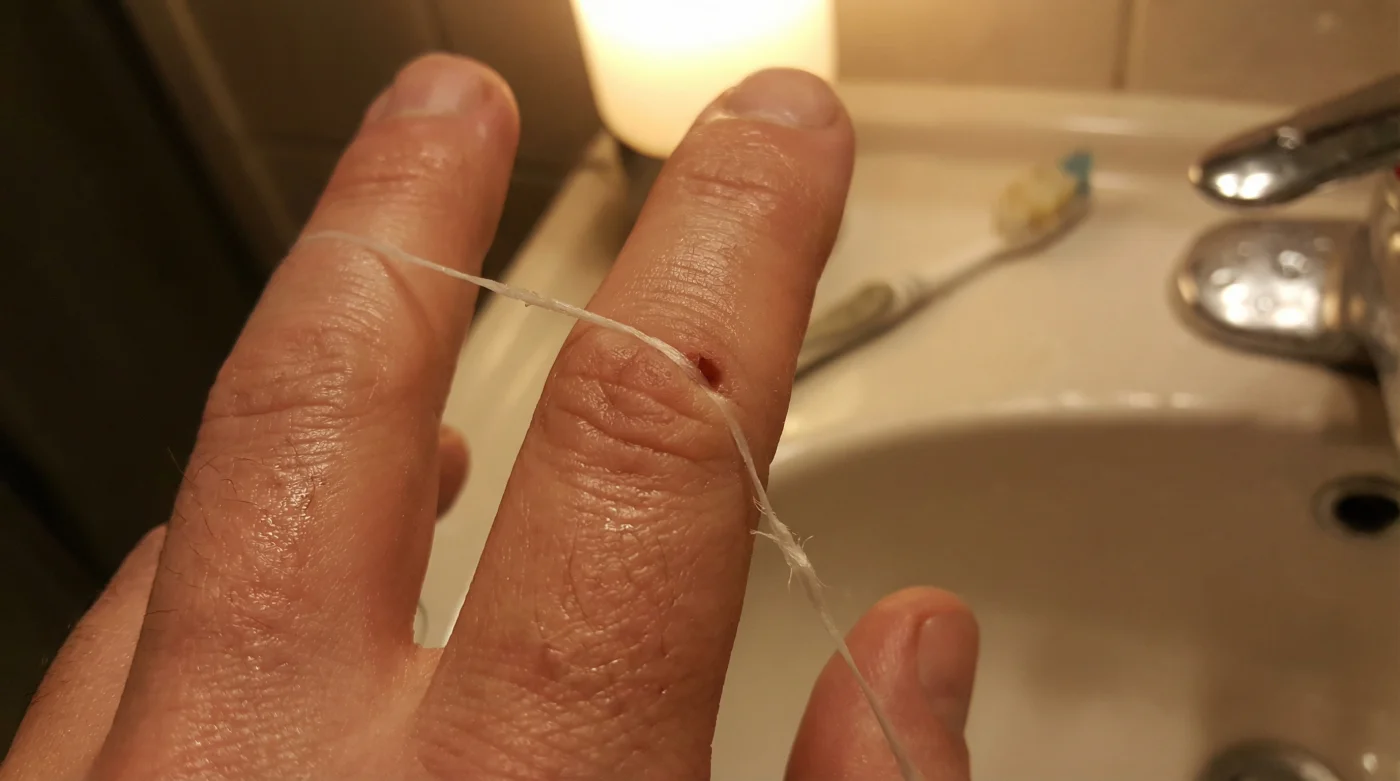
- The Unblocking (Floss First): Wrap the tape around your middle fingers. Slide it gently down, curving it into a ‘C’ shape against the side of the tooth. Wipe upwards. You are physically opening the gates.
- The Evacuation (Rinse): Cupping a small amount of water, vigorously swish it around your mouth. This physically flushes out the dislodged debris into the basin, removing it from the environment entirely.
- The Treatment (Brush): Apply a pea-sized amount of paste. Spend two full minutes massaging the teeth. Now that the interdental spaces are completely clear, the fluoride-rich foam can flow effortlessly between every tooth, coating the most vulnerable areas.
- The Protective Seal (Spit, Do Not Rinse): Spit out the excess foam. Do not rinse with water or mouthwash. Leave the microscopic layer of paste on your teeth as you get into bed.
The Quiet Peace of a Protected Morning
Waking up with a genuinely clean mouth is a subtle but profound shift in your daily quality of life. The stale, fuzzy feeling that usually demands an immediate morning scrub is replaced by a surprising, lingering freshness.
You are no longer fighting a battle that you silently lost the night before. By simply reversing the order of operations, you stop providing a dark, warm pocket for bacteria to thrive in while you dream.
It shifts the act of dental care from a frantic, obligatory chore into a quiet ritual of self-respect. You are closing the day by meticulously laying down a protective shield, knowing that the tools at your disposal are finally being used in the exact order they were designed for.
The bathroom light clicks off, and as you walk back to the bedroom, there is a quiet confidence in knowing your routine is working perfectly, right down to the microscopic spaces you cannot even see.
“True dental care isn’t about scrubbing harder; it is about clearing the path so your body and your paste can actually do their restorative work while you rest.”
| Key Point | Detail | Added Value for the Reader |
|---|---|---|
| Sequence Priority | Floss before brushing to dislodge trapped debris first. | Prevents bacteria from being pushed deep into gum pockets overnight. |
| Fluoride Delivery | Brushing on freshly cleared teeth allows paste into gaps. | Maximises the enamel-strengthening benefits of your toothpaste. |
| The Final Seal | Spit out the foam, but never rinse with water afterwards. | Leaves a protective, anti-bacterial film over your teeth while you sleep. |
Frequently Asked Questions
Is flossing in the morning just as good as at night?
No. Saliva production drops at night, meaning bacteria left undisturbed will multiply rapidly. Evening removal is non-negotiable for gum health.
Can I use a water flosser instead of string?
Yes, a water flosser is excellent, but the timeline remains exactly the same: flush the spaces first, then brush the paste into the clean gaps.
Why do my gums bleed when I change my routine?
Bleeding is a sign of existing inflammation, not necessarily poor technique. Stick to the new routine gently; the bleeding usually resolves within a week as the tissue heals.
Should I use mouthwash after brushing?
Only if it happens at a different time of day. Using it immediately after brushing washes away the concentrated fluoride left by your toothpaste.
Does the type of floss actually matter?
Woven or expanding tape tends to grab more debris than slick, waxed strings, but the best tool is simply the one you consistently use before picking up your toothbrush.