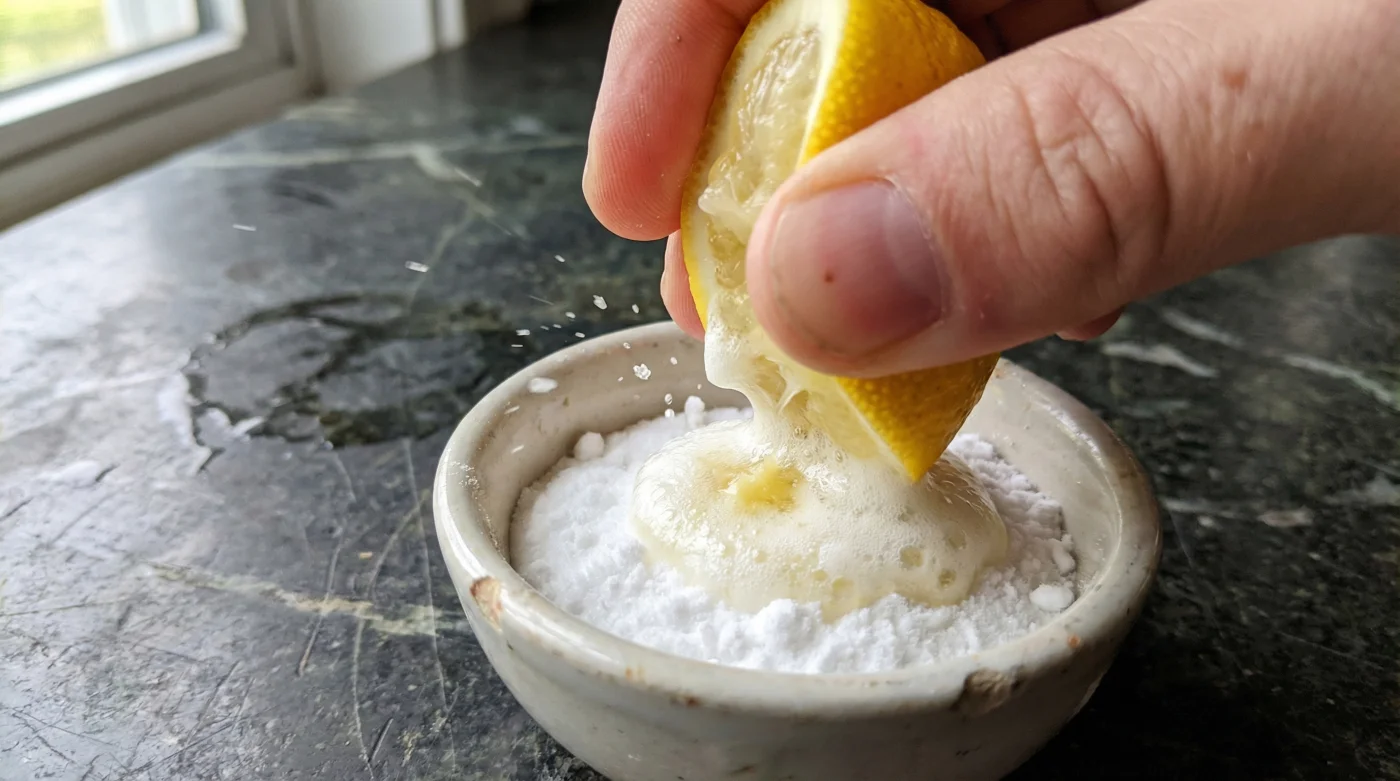
The soft, blue glow of your phone screen illuminates the bedroom as you scroll through late-night videos. You watch a smiling face squeeze half a lemon over a spoonful of white powder in a small ceramic dish. The sharp, citrus scent almost seems to waft through the screen as the mixture bubbles and fizzes. It creates a thick, gritty paste that promises the kind of blinding white smile usually reserved for silver screen actors and wealthy broadcasters.
It looks entirely harmless, perhaps even wholesome. After all, you have these exact ingredients sitting in your kitchen cupboards right now, next to the baking parchment and the self-raising flour. You might even be tempted to pad downstairs in your socks, quietly retrieving a spoon to try it yourself before bed, fully convinced you have stumbled upon a clever, thrifty beauty secret.
But that satisfying effervescence is actually a violent chemical reaction that should never cross your lips. What is touted online as a natural, harmless trick is, in reality, a highly destructive and corrosive paste. You are not simply dissolving surface stains; you are actively attacking the very foundation of your dental structure, stripping away layers that can never be replaced.
The combination of baking soda and lemon juice destroys your protective barriers in a matter of seconds. Instead of a brighter appearance, you are left with teeth that are permanently sensitive to cold, turning a refreshing sip of iced water into a sharp, lingering electric shock.
The Porcelain Metaphor
To truly understand what happens when you scrub your teeth with acidic grit, you must picture a delicate, antique porcelain teacup. If you noticed a stubborn brown tea ring clinging to the inside of that cup, you would never dream of reaching for coarse sandpaper soaked in malt vinegar to scrub it clean. The abrasive texture, combined with the sharp acid, would permanently scratch away the smooth, protective glaze.
Once that glaze is gone, the porous ceramic underneath is completely exposed. It becomes highly vulnerable to acid and begins to absorb every drop of dark liquid it touches thereafter. Your dental anatomy functions in exactly the same way. The outer shell is the hardest substance in your body, yet it remains incredibly fragile when exposed to sudden, sharp drops in pH levels.
The slight, natural creaminess of your teeth is rarely a flaw; it is most often the dense, healthy internal layer showing through a translucent outer shell. When you desperately strip that shell to chase a flat, paper-white ideal, you are not cleaning your teeth. You are effectively dismantling your mouth’s primary defence system, leaving the delicate nerve endings breathing through a pillow of nothingness.
Consider the stark reality faced by Dr Eleanor Vance, a restorative dentist operating out of a quiet, meticulously kept clinic in Bath. Just last Tuesday, she spent three hours carefully bonding resin to the front teeth of a twenty-six-year-old graphic designer. The young woman had used this exact viral lemon and bicarbonate trick every morning for a fortnight before her sister’s wedding. Dr Vance noted that the protective coating at the gum line had not merely thinned; it had completely melted away. The edges of the patient’s teeth looked worryingly translucent, and the young woman wept in the chair, explaining how merely breathing in the crisp winter air caused her agonising, shooting pain.
Adjustment Layers: How You Actually Stain Your Teeth
Not all discolouration is created equal, and understanding your specific daily habits is far more effective than reaching for a harsh, reactive fix. You must observe exactly how you live your life before you can safely address the dullness in the mirror.
For the Earl Grey Devotees, the situation is mostly superficial. The tannins present in black tea and coffee bind tightly to the sticky, invisible film that forms over your teeth throughout the day. You do not need bleach; you simply need a gentle, daily disruption of this film. Using a soft-bristled brush and a standard fluoride paste will gently sweep away the tannins before they have a chance to harden into calculus. You just need consistency over aggressive force.
For the Red Wine Enthusiasts, the risk is structural. The acidity in a glass of claret temporarily softens your outer dental layers, making them incredibly receptive to the dark, staining pigments. If you rush to the bathroom to scrub your teeth the moment you finish your glass, you risk scratching that temporarily softened surface.
Waiting a full half-hour allows your saliva to naturally wash away the acid and harden the surface once more. Saliva is your body’s built-in repair mechanism, constantly bathing your mouth in calcium and phosphate. Let your body recover naturally.
For the Ageing Smile, the process is entirely internal. As the years pass, your outer shell naturally thins from decades of chewing, while the yellowish layer beneath continues to thicken and darken. This is a wonderfully healthy, structural change that proves your teeth are strong and vital. Surface bleaching will never alter this internal shift. Only professional, peroxide-based treatments, carefully overseen by a clinician, can safely lighten the internal structure without eroding the exterior.
A Mindful, Minimalist Dental Routine
- Drinking ice water immediately after waking severely disrupts your cellular hydration
- Professional dentists warn against this viral baking soda teeth whitening hack
- Stop mixing raw honey with tap water for DIY face masks
- Dermatologists reveal the exact order to layer hydrating serums after double cleansing
- Coconut oil applied to split ends actually prevents atmospheric moisture absorption entirely
You can maintain a bright, highly functional smile without ever resorting to corrosive kitchen experiments. The secret lies in minimal, highly deliberate actions that protect rather than destroy.
- Dry brushing first: Spend sixty seconds sweeping a dry, soft-bristled brush over your teeth before applying toothpaste to gently dislodge plaque without abrasive foaming agents.
- The spit, do not rinse rule: After brushing with fluoride paste, spit out the excess but never rinse your mouth with water. Leaving the residue allows minerals to absorb deeply overnight.
- Strategic hydration: Swish plain water vigorously around your mouth immediately after consuming staining or highly acidic foods to neutralise the environment.
- Wait for the remineralisation window: Always wait at least thirty minutes after eating a meal before you attempt to brush.
The Tactical Toolkit: To execute this safely, ensure your tap water is tepid, sitting around thirty-seven degrees Celsius, to avoid shocking delicate nerves. Hold your toothbrush with just your thumb and index finger; this prevents you from applying too much pressure and scrubbing away your gum line. Aim for two minutes of slow, circular motions, twice a day, focusing purely on gentle, methodical plaque removal.
Respecting Your Smile’s Architecture
Moving away from aggressive, instant-fix internet trends brings a quiet sort of freedom to your morning routine. When you finally stop viewing the natural, slightly creamy shade of your teeth as a stubborn flaw to be eradicated, you begin to appreciate the remarkable durability of your own body. You realise that a mouth that functions without pain is a quiet luxury.
Protecting your structural integrity means protecting your everyday comfort. It means you can confidently bite into a crisp green apple without a second thought, or enjoy a freezing ice lolly on a sweltering July afternoon without flinching in pain.
Mastering this mindful, deeply respectful approach to oral care ensures your smile remains functional, comfortable, and naturally bright for decades to come. You are not just preserving a look; you are safeguarding your ability to eat, speak, and laugh freely.
True dental care is an act of gentle preservation, a daily commitment to protecting the intricate structures we rely upon, rather than an aggressive demolition.
| Key Point | Detail | Added Value for the Reader |
|---|---|---|
| The Acid Threat | Lemon juice softens enamel while baking soda permanently scratches it away. | Prevents irreversible damage and lifelong sensitivity to cold. |
| Proper Brushing | Use a soft-bristled brush and hold it with just two fingers. | Saves you from receding gums and exposing the sensitive layer beneath. |
| Saliva Defence | Wait thirty minutes after eating before you attempt to brush. | Allows your body’s natural remineralisation process to protect your teeth. |
Frequently Asked Questions
Is baking soda safe to use on its own?
Used very occasionally, dry bicarbonate of soda can gently lift surface stains, but it is highly abrasive and should never replace standard toothpaste.
Why do my teeth look more yellow as I get older?
Your translucent outer layer naturally thins with age, revealing more of the dense, yellowish core beneath. This is entirely normal and healthy.
Can I reverse enamel damage from lemon juice?
Once the physical structure is dissolved, it cannot grow back. You can only manage the resulting sensitivity with specialist pastes and professional treatments.
How long should I wait to brush after drinking coffee?
Always wait at least thirty minutes. Coffee is acidic, and brushing immediately can scratch the temporarily softened surface.
What is the safest way to whiten teeth at home?
Maintain impeccable daily hygiene, avoid aggressive scrubbing, and consult a professional for safe, peroxide-based treatments that do not erode your protective barriers.